
This spring, CNIGA is actively engaged in a wide array of issues and activities. These include two high-stakes issues confronting the tribal government gaming industry, as well as engaging in legislation and other events surrounding our state government and democratic processes.
As I have reported previously in this column, CNIGA is engaged in the fight against the illegal use of prediction markets being used for, among other things, sports betting. It is not hyperbole to stress that this is a code red situation and nothing less than a nationwide existential threat to tribal government gaming.
Prediction markets have long been legitimate financial tools tied to commodities and risk management for agricultural producers against unforeseen events. However, in just the last year and a half, these markets have evolved into platforms offering contracts on the outcomes of sporting events and other real-world activities. To put it bluntly, that is not financial hedging; it is gambling.
These products are offered online through registered exchanges such as Kalshi, Crypto.com, and Robinhood across all 50 states and tribal jurisdictions, including here in California and on tribal lands, regardless of the legal frameworks that govern gaming in those jurisdictions.
These markets are ostensibly overseen by the Commodity Futures Trading Commission (CFTC). While the CFTC is supposed to have a full complement of five commissioners, drawn from each political party, there is currently only one commissioner, Michael Selig, a recent Trump appointee. This gives him an unusually outsized influence on the direction of the commission. Under his watch thus far, the CFTC has taken an active role in legal cases that have sought to ban the use of prediction markets in those states. These efforts, surprisingly, include interventions on behalf of the rogue exchanges and against states such as Arizona, Illinois, Connecticut, and, just recently, New York and Wisconsin.
Ultimately, it will be one of those legal cases, of which CNIGA has signed on to several amicus briefs, that will eventually make it to the United States Supreme Court. Law experts advising CNIGA estimate that the issue will reach the United States Supreme Court perhaps as soon as late this year or early next year. When it does, there will likely be a broad bipartisan coalition of state attorneys general lined up to oppose illegal uses of prediction markets in their individual states. In fact, 41 of those state attorneys general have asked the CFTC to recognize that these event contracts are not legitimate financial tools but unregulated sports gambling, which is governed by states and not the federal government.
CNIGA has taken an active role in dealing with the issue. We have participated in weekly coordination calls with national and state organizations and have closely monitored developments. We recently submitted comments on CFTC-proposed rules on the prediction market.
CNIGA also co-hosted a roundtable in late April at the State Capitol with the Yuhaaviatam of San Manuel Nation, a CNIGA member tribe, entitled Betting Without Borders: How Prediction Markets Fuel Illegal Gambling. The roundtable attracted several legislators and their staff in a packed room and featured a panel that included CNIGA Treasurer and Soboba Band of Luiseno Indians Chairman Isaiah Vivanco. The panel gave background and explained the political and legal activity surrounding the issue.
Chairman Vivanco told the roundtable that because this activity is being enabled through federal regulatory structures, federal clarity will be essential. However, comprehensive action from states like California can reinforce the legal challenges already underway and help protect existing regulatory frameworks, including tribal compacts.
It is a comprehensive action that is key at the state level. CNIGA has engaged with multiple members of the California legislature who drafted well-meaning, though narrowly focused legislation that would ban the worst abuses of prediction markets, such as insider trading. However, at CNIGA, we are concerned that legislation such as this would imply that other forms of illegal activity, including sports betting, would be permissible. The legislative authors of these bills ultimately pulled them, rendering them effectively dead for the year.
In other news, CNIGA is continuing to hold sports wagering meetings in various locations. These discussions have proven to be informative and fruitful. The broad contours of what a tribally driven and tribally led legalized sports wagering framework in California would look like are becoming clearer.
Following up on multiple meetings since October, we most recently hosted a meeting in Sacramento in April, and by the time this comes to print, we will have hosted another two meetings in May and June. These meetings are open to all federally recognized tribes in California, and tribes that are interested in attending should watch for meeting notices sent to their tribal offices. Broad participation is essential to ensure that any tribally driven sports wagering efforts are carefully considered and supported across as many tribal governments as possible.
On other fronts, in February, California Attorney General Rob Bonta issued new regulations regarding blackjack and player-dealer rotation. The regulations essentially set down rules against commercial card rooms offering blackjack, or 21-style card games, as well as setting rules for player-dealer rotation at card games to avoid a de facto house bank. Though we believe these rules could have gone further, we acknowledge that they are an important step forward in the fight against illegal card games at the state’s commercial gaming establishments. We hope that Attorney General Bonta will now enforce these rules.
CNIGA is also supporting non-gaming legislation, including SB 1305, authored by Senator Laura Richardson, that seeks to require the California Department of Fish and Wildlife to develop and make publicly available a roadmap for the reintroduction of grizzly bears in California.
CNIGA is also supporting AB 2167 by Assemblymember Alexandra Macedo, which is a technical fix bill for last year’s CNIGA-supported AB 1485 that was signed into law earlier this year. Mooretown Rancheria is the sponsor of both AB 2167 and AB 1485. AB 1485 ensured that federally recognized Indian tribes receive the same property tax exemptions as other conservation-focused entities during land transfers. However, tribes do not always hold land solely in the name of the tribe itself or through a wholly owned subsidiary structured under state law. AB 2167 seeks to ensure that those tribally chartered entities are expressly included, so the law functions as intended.
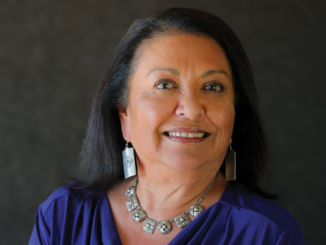
James Siva is the Chairman of the California Nations Indian Gaming Association. For more information, please visit www.cniga.com.