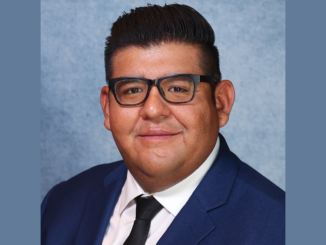
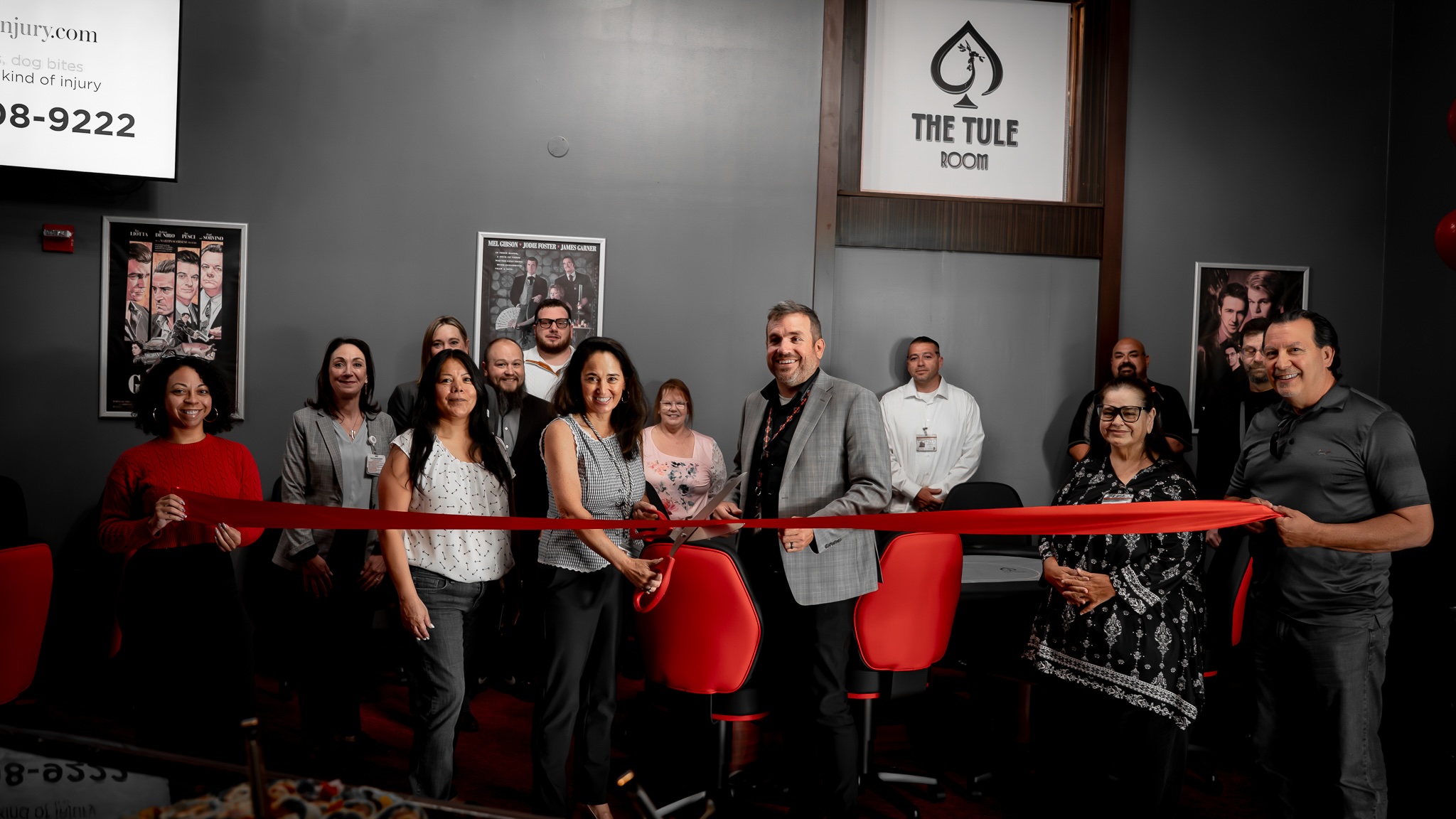
In highly competitive regional gaming markets, standing out isn’t easy — especially for smaller properties competing against larger casinos with more amenities. But at Running Creek Casino, General Manager Josh Thurmes saw an opportunity where others might have seen risk: poker. In this candid operator-to-operator conversation, Josh shares why the property launched The Tule Room, what success looks like beyond direct revenue, and what operators can learn about differentiation, guest experience, and leadership in today’s challenging market.
CF: Running Creek operates in a highly competitive regional market in Northern California, yet you chose to invest in something your competitors don’t offer: a poker room. What was the “why” behind opening The Tule Room?
JT: There were a few whys when considering poker at Running Creek, but mainly offering something that no one else in our competitive market offers was the main driving factor. Running Creek is a smaller casino property that is growing fast in a highly competitive market. There are five tribal casinos within a 50-mile radius of Running Creek. They all offer a hotel and a gas station, things that Running Creek does not yet offer. I was looking for a way to set us apart in a highly competitive market. In addition to that, Lake County offers limited things to do, and adding poker has been received well by the local community as another amenity that was missing in this market.
CF: You mentioned that poker rooms aren’t always huge money makers on paper. So, from your perspective as a GM, what makes a poker room still strategically valuable for a smaller casino?
JT: As noted above, Running Creek now offers something that our competitors don’t. We can market that and draw guests specifically looking for poker. It is not a huge money maker, but a well-run poker room can be profitable. In addition to poker drop, increasing guest counts in a competitive market is always a good thing. The residual effect that is expected is also a main driver for adding this amenity to the property. We have already seen an uptick in coin-in, table games drop, and F&B, which directly align with increasing guest counts on the property.
CF: Since opening The Tule Room, what early indicators are you watching most closely? Are you looking at new player acquisition, increased trip frequency, longer stays, food and beverage spend, player loyalty, or something else? What would you personally consider a “win” one year from now?
JT: Everything that you mentioned for sure. We are already seeing new guests, so player acquisition is key. I am also working on measuring poker players’ play in other areas, such as slots and tables. We have seen the acquisition of new players and can see table sessions and slot sessions with their players.
One year from now, I’d like to see a residual boost in table games, slot play and food and beverage sales, directly related to poker. From the poker-specific point of view, I’d like to be in a place to expand the space. Either opening seven days a week or adding another table or two because the demand is there. Right now, we are open Wednesday through Sunday at noon.
CF: Running Creek is very much a local-driven property rather than a tourist destination. How does that shape the way you think about amenities, customer experience, and gaming strategy compared to larger destination casinos?
JT: We have to be at the top of our game all the time. I have always focused on three core pillars in the hospitality industry: service, quality, and the overall guest experience. I have my team highly focused on those pillars, and we use them closely in our decision-making process. The data always shows that people play most at the casino closest to their home. In a highly competitive market, you must stand out from the competition to get people to drive further to game with us. I believe that at Running Creek, there is always something exciting happening, and when you come here, your experience is going to be more memorable than our competitors’. We achieve this by focusing on guest service, quality of our product, and delivering the best guest experience possible.
CF: You’ve worked across the country in tribal and commercial gaming, from the Midwest to South Dakota and now Northern California. What surprised you most about the Northern California market during your first year here? What’s different — and what’s universal no matter where you operate?
JT: This market is still challenging for us, but we have made big progress in a year. Compared to the tribal properties I was with in Minnesota, I’d say that Northern California is much more competitive. In Minnesota, the next closest casino property was many times over 100 miles away. So, it was very clear what your market was like. In Lake County, there are four tribal casinos in a county that has 70,000 people. You have to be very strategic inside your market and establish ways to set yourself apart from the competition. We have focused on offering the best table games mix, the newest slot machines on the market, and the addition of our poker room.
CF: Your background started in table games and poker before eventually moving into broader casino operations and now the GM role. How has that experience on the gaming floor shaped the way you lead today?
JT: I would recommend to anyone that wants a future in gaming leadership to diversify your skills. I am biased towards table games, and table games and poker started my career for me in 2004. During my time in the industry, I have worked in nearly every role in a resort environment, including table games dealer, pit boss, poker dealer, poker manager, floor supervisor, compliance officer, table games director, assistant general manager, and GM. During my time in casino leadership roles, I studied finance and fraud management and filled in for whatever position needed help. When the kitchen has been short-staffed, I’d be the first one in there to help online. When we went through the opening of a new hotel in Deadwood, SD, I was the first one there stripping rooms or parking cars in valet because we lacked staff.
My advice: learn as much as you can. Learn what your team members are going through so there is more understanding as situations and decisions come up. I have always believed in a servant leadership style. Lead by example, and others tend to follow.
CF: Smaller and regional casinos are facing a challenging economy right now — rising costs, cautious consumers, and intense competition. What trends are you seeing in player behavior, and how are operators needing to adapt?
JT: Great question. It is very challenging in this market. In addition to a challenging economy, Lake County is the poorest county in all of California. We have to focus on what we are good at. Our steakhouse, Wild Creek, is widely known around Lake County as one of the best dining experiences. However, when costs increase for us, we have adjusted prices over time. Many times, on Facebook and other social media, we hear from the consumers about pricing and what things used to cost. My goal has always been to use our amenities to drive trips for gamblers, so sometimes our food costs align with that, and costs for us are higher than if we were running a stand-alone restaurant. Also, for some of our bigger ticket items, I have incorporated a kickback in free play with purchase. For instance, on Fridays and Saturdays, we offer a crab feast, which is all-you-can-eat crab. With that purchase, you get $10 in free play to soften the cost of the food and get you started on the gaming floor.
CF: Bonus question because I’m nosy: You’ve now gone from the Midwest to South Dakota to Lake County. Be honest — what’s been the biggest culture shock so far? Weather? Players? Regulations? Food? Traffic?
JT: All of it, honestly. The weather, in a good way. I was so far north in Minnesota that it was almost Canada. We had stretches for weeks at a time that the weather was sub-zero degrees. And once it snowed, it was on the ground all winter since it would never get above freezing. Here, there is no snow. Occasionally, you can see it up in the mountains. So that was a shock in a good way. The traffic, especially as you get close to the Bay, is crazy. The number of people here is nuts. Most of my life, I have been in South Dakota with a total state population of 800K, so when you get by the city, that can come as a shock too, but Lake County does feel very slow and rural, a lot like home.
Regulations are different, but also in a good way. I have a very strong partnership with the Habematolel Tribal Gaming Commission. We work together to get things done for the tribe. In other jurisdictions, I felt more opposition.
Overall, my family and I love California. We, at least I, would never want to move back to the Midwest. I work at a great property that is growing and has lots of potential. This is a beautiful area of the country, and my tribe is very supportive of what I am trying to accomplish. Lake County has its challenges, but I feel like many things are headed in the right direction.
Special thanks to Josh for his candid insights. To find out more about Running Creek Casino please visit: https://www.runningcreekcasino.com/