
Carl Sagan once famously said that if you wish to make an apple pie from scratch, you must at first invent the universe. Keeping players through responsible gambling initiatives has a similar logical flow – in order to keep a player safe, you first need to know who they are.
These days, we see a lot of products in the market that enable an operator to start identifying customers who may need additional support with their gambling. This is great, but there’s a problem – once you’ve found a “problem player,” what do you do? It’s not enough to “just know” – you need to do something.
Moreover, “just knowing” can itself be a risk in terms of compliance. Not only have you identified them, you’ve framed a duty of care.
What’s generally missing from responsible gambling are modalities that can be thought of as “interventional.”
The pathways to support someone struggling with their relationship with gambling typically require the player to come to the realization themselves. The purpose of signage and programs that allow for exclusion are not seen by a player who’s not yet fully consciously aware of what’s going on for them.
At some point those interventions do start to make sense – the sign that delivers the message “stay in control” resonates when the player starts to become aware that they are not in control. Prior to that point the sign is – pun not intended – not noticed because the player doesn’t think that it’s talking to them.
The operator then is limited by what they can do. Have safe landings and respite arranged, and signpost it ahead of time, so that when the player needs them, they don’t have to search from them.
There are issues with this approach. In bother cases, the the intervention comes in late. This is problematic ethically because messaging only makes sense when avoidable harm has been experienced. It’s problematic commercially because this customer is an otherwise good customer, and oftentimes one that’s been the focus of loyalty investment.
The current field of responsible gambling initiatives start from a place of “compliance.” Players living with dependency are framed as a risk. Compliance exists within any organisation – not just casino operators – as a way of managing out risk. It follows then that designs solutions that are rooted in compliance have a “compliance feel.”
The fundamental issue with that is the compliance is all about what you can’t do, not what you can do. “Compliance… ‘comply-ance’.”
From the player’s perspective, this is unwelcome. Any product rooted in compliance has a controlling frame by definition, and people don’t like being controlled, or told what to do, or being labelled as a “problem.” So, now we have two problems – we have interventions that come too late because they don’t resonate, and when they do resonate, comes at the player with an often patronising and controlling vibe.
Yet, we’re getting better at identifying players who are struggling, and this ability is likely only to become more developed.
The trick then is to invert the whole problem and design interventions that are not rooted in compliance. This means we need to build a product for the player not for the casino.
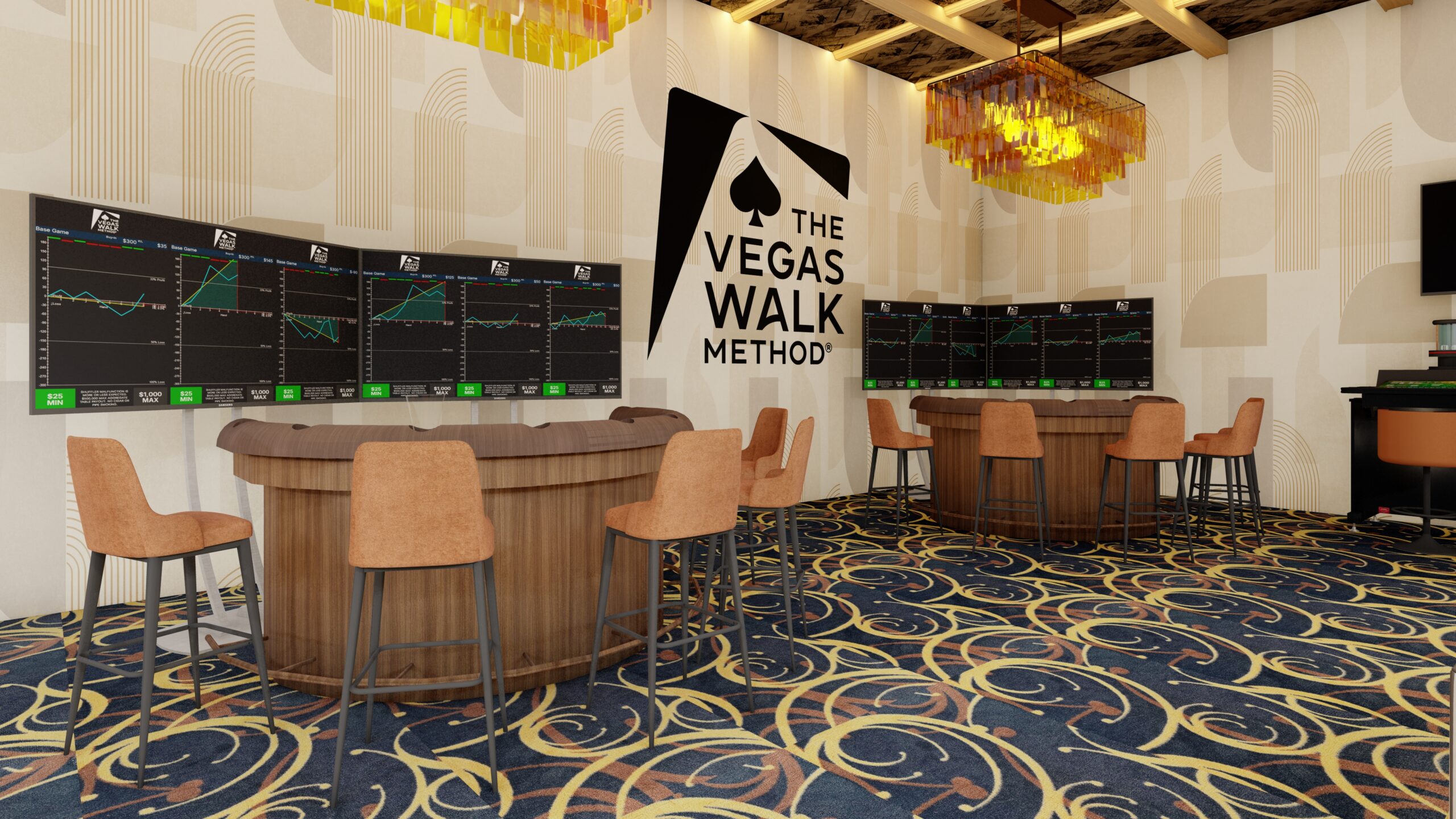
This is what we did with The Vegas Walk Method®. We designed a responsible gambling intervention for the player, that squares the circle of making it safe for the operator to offer because it fundamentally does not cross any red-lines that would make an operator wary.
The design of The Vegas Walk Method® has one focus – get the player to be better at gambling, and in doing so, heal their relationship with it.
The problem for a player who is struggling is not the game, or the operator. The problem is the player’s relationship with gambling – not the game, not the casino. Not even, really, the player. It’s what’s happening in the interaction within the pieces of the puzzle, not the pieces themselves.
Whilst the challenges the player faces will always be multifaceted and difficult to navigate, the situation the player is in case be soothed by giving the player the tools to enact active management over what’s going on for them day-to-day.
Recovery from any dependency requires discipline, focus, and understanding. The point of The Vegas Walk Method® — of any interventional responsible gambling product – is to provide a lever.