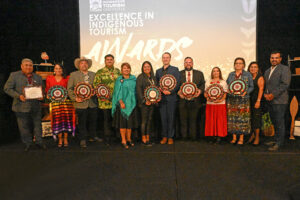
Credit: American Indigenous Tourism Association
TULALIP, Wa. (October 22, 2026) – The American Indigenous Tourism Association announced the awardees of the 2026 Excellence in Indigenous Tourism Awards at the 28th Annual American Indigenous Tourism Conference in Tulalip, Washington on October 21, 2026. The awards celebrate outstanding achievements in Indigenous tourism, recognizing individuals and organizations that contribute to the industry’s $11.6 billion annual economic impact.
“The Excellence in Indigenous Tourism Awards celebrate the visionaries who are transforming how the world experiences and connects with Indigenous culture,” said Sherry L. Rupert (Paiute/Washoe), CEO of the American Indigenous Tourism Association.” Our 2026 honorees represent the absolute best of Indigenous hospitality, economic sovereignty, and cultural preservation. From grassroots artisans and youth entrepreneurs to major destinations, these trailblazers are driving our $11.6 billion industry forward while ensuring our stories are told with authenticity and respect.”
The 2026 Awardees Include:
- Best Cultural Heritage Experience: Suquamish Museum, Washington
- Excellence in Customer Service: Christine Morton (Cheyenne and Arapaho Tribes), Oklahoma
- Best Indigenous Culinary Tourism Experience: Chef Kaimana Barros (Native Hawaiian), Kaimana Catering, Hawaii
- Best Musical Experience: Singing the Birds: Bird Song Festival – Agua Caliente Band of Cahuilla Indians, California
- Indigenous Artisan of the Year: Kelly and Tyson Back (Saint Regis Mohawk Tribe), Fire Loom Creations, New York
- Indigenous Futures Awards: Coen Cadinha (Native Hawaiian); Bree Lopez, (Pascua Yaqui Tribe); and Anisa Pelayo (Cedar Band of the Paiute Indian Tribe of Utah)
- The Industry Professional of the Year Award: Gary Snow of MHA Tourism (Mandan, Hidatsa, and Arikara Nation), North Dakota
- Industry Partner of the Year: Visit California
- Indigenous Destination of the Year: Chickasaw Cultural Center, Oklahoma
Award Recipient Highlights:
Best Cultural Heritage Experience: Suquamish Museum in Washington. Located on Puget Sound, the Suquamish Museum is a premier steward of Coast Salish culture, offering immersive exhibits, educational programming, and language preservation initiatives that celebrate the living history of the Suquamish people. Recognized as one of USA Today’s top Native American museums alongside the Smithsonian, the facility holds a TripAdvisor Travelers’ Choice Award – placing it in the top 10% of attractions worldwide. Through innovative digital storytelling, community outreach, and regional tourism partnerships, the Suquamish Museum serves as an accessible, world-class gateway for visitors seeking authentic cultural exchange and deep connection to Indigenous heritage.
Excellence in Customer Service: Christine Morton (Cheyenne and Arapaho Tribes) in Oklahoma. Christine Morton is recognized for her decades of dedicated service to the Cheyenne and Arapaho Tribes in Oklahoma and her unwavering commitment to preserving, promoting, and sharing Tribal history. As the founder of the Cheyenne and Arapaho Tribes Route 66 Roundtable and the driving force behind the Tribes’ tourism initiatives, Morton has built vital partnerships with local, state, and national entities—ensuring Native voices are represented across regional tourism. Renowned for her collaborative spirit, community mentorship, and cultural stewardship (including facilitating respectful tribal engagement for major projects like the film Gangland), Morton exemplifies true service leadership by using tourism to protect cultural identity, honor ancestors, and build sustainable economic opportunities for future generations.
Best Indigenous Culinary Tourism Experience: Chef Kaimana Barros (Native Hawaiian), Kaimana Catering in Hawaiʻi. Chef Kaimana Barros (“Chef Kai”) redefines culinary tourism by transforming dining into an immersive, values-driven experience rooted in Hawaiian hoʻokipa (hospitality) and mālama ʻāina (caring for the land). Rather than focusing solely on the plate, Chef Kai uses storytelling, local food systems, and ancestral knowledge to connect guests directly to the culture, history, and genealogy of Hawaiʻi. Through Kaimana Catering, every dish serves as a vessel for cultural preservation and food sovereignty, leaving visitors with a profound understanding of their responsibility as guests and creating a transformative model for the future of Indigenous culinary tourism.
Best Musical Experience: Singing the Birds: Bird Song Festival – Agua Caliente Band of Cahuilla Indians in California. Hosted annually by the Agua Caliente Band of Cahuilla Indians, Singing the Birds: Bird Song Festival is a vibrant celebration that draws over 5,000 attendees to honor Cahuilla music, history, and resilience. Bird songs – an ancient repertoire of more than 300 pieces traditionally sung in the Cahuilla language – tell stories of long-ago migrations and ancestral wisdom. Accompanied by the rhythmic shake of gourd rattles, social dancing, and an authentic Native marketplace, this free daylong gathering brings together singers and dancers from across Southern California to ensure these sacred traditions and ancient dialects are passed down from elders to future generations.
Indigenous Artisan of the Year: Kelly and Tyson Back (Saint Regis Mohawk Tribe), Fire Loom Creations in New York. Kelly Tsieriwaiens Back and Tyson Karonhiahere Back, owners of Fire Loom Creations in New York, are celebrated for preserving and elevating the tradition of Haudenosaunee loom beadwork. Famous for custom loom-beaded belts that integrate natural materials like deer sinew and porcupine quills, the couple creates world-class public art – including a 10-foot Creation Story belt acquired by the Akwesasne Cultural Center and a feature commission for the Buffalo Bills’ new Highmark Stadium. Through immersive cultural experiences, community belt-making, and traditional maple sap harvesting, Kelly and Tyson share authentic teachings of peace, respect, and ecological stewardship with visitors from around the world.
Indigenous Futures Award was presented to Coen Cadinha (Native Hawaiian). At just 18 years old, Coen Cadinha embodies the Hawaiian value of kuleana (responsibility) by creating economic pathways for the next generation of Native Hawaiian leaders. As the founder of Keiki Rise, a youth-serving non-profit, Cadinha helps young entrepreneurs scale their businesses and achieve financial sustainability while staying rooted in cultural identity. Under his leadership, Keiki Rise has supported over 176 youth entrepreneurs – more than 75% of whom identify as Native Hawaiian – facilitated 240+ hours of programming, and helped young business owners generate over $450,000 in revenue. Cadinha is recognized for laying a strong foundation for future cultural practitioners, artists, and tourism leaders across Hawaiʻi.
Indigenous Futures Award: Bree Lopez (Pascua Yaqui Tribe). Bree Lopez, Sports Sales Manager for Visit Tucson, brings a deep commitment to honoring Indigenous values while driving major economic impact on her ancestral homelands. Grounded in a family legacy of tribal tourism that began at her Tribe’s Casino Del Sol Resort, Lopez has quickly emerged as an industry standout, generating $10.4 million in sports tourism revenue within her first six months and earning the Snoop Dogg Arizona Bowl Blue Blazer leadership award. In addition to securing major national sports accounts, she elevates Native representation across the destination marketing organization – contributing an Indigenous perspective to Visit Tucson’s rebrand and promoting inclusive tourism alongside the Pascua Yaqui Tribe and Tohono O’odham Nation.
Indigenous Futures Award: Anisa Pelayo (Cedar Band of the Paiute Indian Tribe of Utah). At 23 years old, Anisa Pelayo brings her Nuwu (Southern Paiute) heritage directly into the Nevada tourism, gaming, and hospitality sectors. A trailblazing leader, Pelayo served as the 2022 Miss Paiute Indian Tribe of Utah and co-founded UNLV’s American Indigenous Business Leaders (AIBL) chapter before becoming the first Native American undergraduate student to earn UNLV presidential recognition with the 2025 Outstanding Student Graduate Award. From digital marketing at Palms Casino Resort to her role as Marketing & Outreach Coordinator for the Indian Nations Gaming & Governance Program, Pelayo combines cultural integrity with modern marketing expertise to position tribal gaming and tourism as sustainable economic drivers for Indigenous communities.
Industry Professional of the Year Award was presented to Gary Snow, Earth Lodge Village Supervisor, MHA Nation Tourism. Gary Snow of the Mandan, Hidatsa, and Arikara (MHA) Nation in North Dakota is recognized for his steadfast leadership, dedication, and collaborative spirit in advancing Indigenous tourism. Stepping into a key leadership role at MHA Tourism during a pivotal transition, Snow has been instrumental in building regional and national partnerships across the North Dakota Native Tourism Alliance and the North Dakota Tourism Division. Through his behind-the-scenes stewardship of initiatives like the MHA Interpretive Center and Earthlodge Village, Snow helps create economic and employment opportunities that keep young people connected to their heritage. His work ensures that the culture, history, and traditions of the Three Affiliated Tribes are shared with authenticity, respect, and lasting impact.
Industry Partner of the Year Award was presented to Visit California. Visit California has shown outstanding leadership and meaningful contributions to the advancement of Indigenous tourism throughout California. As a trusted and valued partner, Visit California has worked alongside California Tribes and AIT to increase awareness, drive visitation, and elevate the visibility of Indigenous cultural tourism experiences across the state. Through the Visit Native California initiative, Visit California empowered Indigenous voices by entrusting AIT to lead outreach efforts and content development, ensuring authentic storytelling remained at the forefront. Their partnership has also been instrumental in the publication and promotion of the Juan Bautista de Anza National Historic Trail Guidebook and video interviews, providing photography, editorial expertise, and resources for the guidebook’s California launch. Beyond these contributions, Visit California has consistently fostered new opportunities for collaboration by connecting AIT with partners and stakeholders throughout the state, helping build a stronger network of support for Indigenous tourism initiatives. Their vision, partnership, and dedication to authentic engagement have helped create lasting impacts for California Tribes and Indigenous destinations, setting a powerful example of how destination organizations can work alongside Indigenous communities to achieve shared success.
Indigenous Destination of the Year was presented to The Chickasaw Cultural Center in Oklahoma. Opened in 2010 in the heart of south-central Oklahoma, the Chickasaw Cultural Center is one of the largest tribal cultural centers in the United States, offering visitors an immersive journey into the rich history and traditions of the Chickasaw people. Spanning a world-class campus, the center features living history through stomp dance demonstrations, First American research facilities, and the Chikasha Inchokka’ Traditional Village – recently named a top attraction in the 2026 USA TODAY 10 Best Readers’ Choice Awards. Guests can explore dynamic exhibits tracing Chickasaw history from early European contact to modern-day culture, engage with annual traditions like the Holba’ Pisachi’ Native Film Festival, and visit the center’s renowned monarch butterfly conservation gardens. Having recently surpassed one million visitors, the Chickasaw Cultural Center stands as a premier destination for cultural preservation, education, and Indigenous tourism.
For 28 years, the American Indigenous Tourism Association has worked to address inequities in the tourism system and has served as the national voice for U.S. Indigenous peoples engaged in cultural tourism, while providing technical assistance, training and capacity building to Native Nations and communities and Indigenous-owned enterprises engaged in tourism, hospitality, and recreation.
Native Nations and communities who are looking to start or expand their cultural tourism footprint can find resources at www.AmericanIndigenousTourism.org and visitors interested in learning more about Indigenous culture can visit www.DestinationNativeAmerica.com.