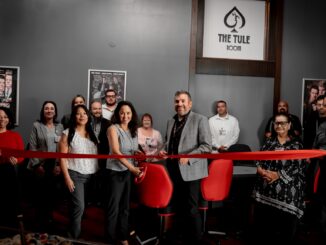

A look inside Graton Resort and Casino’s expansion — from a 40-acre farm and rooftop dining destination to a new vision for gaming, hospitality, and guest experience.
When most people think about a casino expansion, they think about more gaming positions, bigger buildings, and perhaps a few new amenities. During a recent visit to Graton Resort and Casino in Sonoma County, California, I discovered something more interesting.
Yes, Graton has just completed the first phase of a major expansion that includes a new smoke-free gaming experience, additional gaming space, and several new food and beverage concepts. But what stood out most during my visit wasn’t what was added — it was how connected everything felt.
Over two days, I toured the property, walked through the tribe’s farm operation, explored the new restaurants, and sat down with the people helping bring the vision to life. From a rooftop restaurant built around live-fire cooking to a farm supplying fresh produce just down the road, there is a clear emphasis on creating experiences that extend well beyond the gaming floor.
To learn more, I spoke with Executive Chef Roy Ellamar, Vice President of Culinary Operations Jennifer Murphy-Ellamar, consultant farmer William Henpenn, and Chief Marketing Officer Jeremy Weinstein. Together, they shared how Graton is blending hospitality, agriculture, dining, and guest experience into something uniquely Sonoma County.
Fish, Farm, and Fire: Chef Roy Ellamar’s Vision for AYA
If there is one venue that captures the ambition behind Graton’s expansion, it is AYA.
Perched above the casino floor with views across Sonoma County, the 27,000-square-foot indoor-outdoor dining destination serves as the culinary centerpiece of the project. But for Executive Chef Roy Ellamar, the concept began long before the first guests walked through the door.
“We’ve been working on this project for a long time,” Ellamar told me. “We’re finally here, and it’s amazing to see it all come together.”
The restaurant’s guiding philosophy can be summed up in three words: fish, farm, and fire.
The “fire” component came naturally once Chef saw the kitchen design and realized there was an opportunity to incorporate live-fire cooking throughout the menu.
“I love the taste of the fire in the food,” he said. “The wood, the different woods that you can use, and the charcoal.”
The “fish” reflects Graton’s location in Sonoma County and its proximity to Northern California’s coastline. While the property already had a successful steakhouse, Chef saw an opportunity to create something different — one that focused on seafood and ingredients sourced from the region.
But the heart of the concept is the farm.
One of the factors that drew Chef to the project was the opportunity to work directly with a farmer and help shape what would be grown for the restaurant. Today, produce arrives from the tribe’s existing five-acre farm while a larger 40-acre farm is being developed to support AYA and other dining venues across the property.
For Chef, cooking seasonally isn’t a challenge — it’s the entire point.
“Working with products when they’re in their prime and when they’re ready to be used” has been a cornerstone of his culinary philosophy throughout his career.
That means menus change. Ingredients come and go. Staff members must remain flexible. And diners experience what’s growing rather than what can be shipped across the country.
“We are dictated by nature and what is being grown and when it’s ready,” he explained.
At the time of my visit, lettuces, herbs, carrots, and beets from the farm were already appearing on guests’ plates, with tomatoes, potatoes, and corn expected later in the season.
The approach requires constant communication between the farm and the kitchen, but it also creates something increasingly rare in modern dining: a menu tied directly to the seasons.
The personal touches appear throughout the menu as well. One dessert that particularly stood out was the brown butter banana bread with banana caramel and yuzu ice cream. Chef explained that the recipe was inspired by his mother’s banana bread, a small but meaningful reminder that behind the fire, seafood, and seasonal produce is a chef bringing pieces of his own story to the table. It’s those kinds of details that make AYA feel less like a concept and more like a reflection of the people behind it.
Of course, AYA offers more than exceptional food. During dinner, another standout was the Golden Eclipse — a blend of grilled banana-infused vodka, crème de banane, espresso, vanilla, and cinnamon. Equally impressive was the team behind the bar. Rather than simply dropping off a cocktail, the bartenders took the time to explain how it was crafted and why the flavors worked together. It’s a small detail, but one that reinforced the level of hospitality and attention to experience that AYA is aiming to deliver.
Chef also points to the property’s wine program, craft cocktails, live DJ, and stunning rooftop setting as part of the overall experience. Together, they create a destination unlike anything else currently offered at the resort.
And after spending an evening there, it’s easy to see why AYA is quickly becoming one of the most talked-about additions to Graton’s expansion.

More Than a Meal: Building a Dining Destination
While Chef Roy Ellamar is responsible for the culinary vision behind AYA, bringing that vision to life across a large resort operation requires an entirely different skill set.
That’s where Jennifer Murphy-Ellamar comes in.
As Vice President of Culinary Operations, Murphy-Ellamar oversees all restaurant operations at the resort, from culinary teams and kitchens to front-of-house service. Her responsibilities span Graton’s existing dining portfolio as well as the new concepts introduced through the expansion.
And there has been plenty to oversee.
Along with AYA, Graton recently opened Playbook, a sports bar featuring wall-to-wall screens and an energetic game-day atmosphere, and SoCo Dough Co., a colorful donut concept that has quickly become one of the property’s most popular new attractions.
“Out of all three, that one has really blown us away with how well it’s been received and the demand for donuts,” she said with a laugh.
After visiting SoCo Dough Co., I completely understood the enthusiasm. I made the mistake of carrying one of the shop’s oversized banana-filled donuts back to my room. The thing barely fit in its container and drew more comments and curious looks from passing guests than if I had been walking through the casino in a wedding dress. Apparently, everyone wanted to know where the donuts were.
But while new restaurants create excitement, Murphy-Ellamar’s focus is on something larger than individual venues.
“We have set a goal for ourselves to become Sonoma County’s premier dining destination,” she explained.
That statement says a lot about Graton’s approach. Rather than viewing food and beverage simply as a supporting amenity for casino guests, the property is positioning dining as a reason to visit in its own right.
Of course, people still come to Graton to game. But Murphy-Ellamar hopes locals and Bay Area residents will increasingly think about the resort as a dining destination as well.
“We want to change the perception so that people think about us in another way,” she said.
Murphy-Ellamar believes great restaurants are ultimately built around people. While guests see the finished experience, much of the work happens behind the scenes through training, development, and culture.
“There’s a lot of emphasis and focus on taking care of our team members,” she said.
That commitment was evident throughout my visit. Service felt polished but genuine, and team members appeared engaged, knowledgeable, and proud of what they were building.
In an era when labor challenges dominate conversations throughout hospitality, Graton’s emphasis on culture may be every bit as important as the restaurants themselves.
The Farm Behind the Food
About a mile and a half from AYA, another piece of Graton’s story is quietly taking shape.
On a five-acre farm currently serving Tribal citizens, employees, and resort operations — and with a larger 40-acre farm under development — William Henpenn spends his days growing produce and helping connect agriculture to hospitality.
Henpenn’s path to farming is somewhat unconventional.
His career began in restaurants, where he worked as a chef and restaurant owner before later becoming a sommelier and beverage director. Eventually, he transitioned into farming, bringing with him a deep understanding of how chefs think and how restaurants operate.
That perspective makes him uniquely suited for his work with Graton.
“We’re kind of constantly tweaking and twisting things,” Henpenn said of his ongoing collaboration with Chef Roy Ellamar.
The relationship between the farm and the restaurant is far more integrated than a traditional supplier relationship. The two speak regularly about upcoming crops, menu plans, and seasonal availability. Before AYA even opened, Chef provided a wish list of products he hoped to feature, and Henpenn worked to identify what would thrive in Sonoma County’s growing conditions.
The existing five-acre farm serves a larger purpose as well.
According to Henpenn, the chairman’s vision was never centered on maximizing profit.
“It’s not about the ROI,” he told me. “It’s about the heart.”
The farm produces food for tribal citizens through community-supported agriculture programs, supplies produce for employees, and helps reconnect people with where their food comes from.
Throughout the property, that philosophy shows up in ways both large and small.
Vegetables are grown without pesticides. Flowers are planted among crops to support pollinators. Herbs are harvested for culinary use. Mint is dried for teas and other products used by tribal members. The operation is intentionally hands-on, with compost moved by wheelbarrow and much of the work completed manually.
The result is a farm that functions as both a food source and a community resource.
For visitors dining at AYA, it also creates a direct connection between the menu and the land.
“There is a certain section on the menu that’s really just from the farm,” Henpenn explained.
And because the farm sits so close to the restaurant, guests aren’t simply hearing a marketing story. They are eating produce harvested nearby, often just days — or even hours — before it reaches their table.
As someone who spends plenty of time in the garden myself, I appreciated Henpenn’s final piece of advice.
For anyone considering growing food at home, his recommendation was simple.
“Plant one plant,” he said. “That’s really what you need.”
It’s hard to argue with that.

Beyond Gaming: Creating Reasons to Visit
For Chief Marketing Officer Jeremy Weinstein, Graton’s expansion was never about adding gaming positions for the sake of adding gaming positions.
Instead, the question was much broader:
What would give guests more reasons to visit?
“We didn’t want to just add gaming square footage,” Weinstein explained. “We wanted to approach it as what would be a meaningful expansion for our guests.”
The answer became a collection of projects designed around guest feedback and changing consumer preferences.
A major component was the addition of a smoke-free gaming area, providing guests with a choice that had become increasingly important during customer research and surveys.
According to Weinstein, the response has exceeded expectations.
The new smoke-free gaming space accounts for roughly a third of the expanded area, and guest demand has already prompted plans for additional table games and experiences within the section.
“We were unexpectedly surprised by how many guests enjoy spending their time in this section,” he said.
The expansion also reflects a broader trend occurring throughout gaming and hospitality.
While gaming remains the foundation of the business, non-gaming amenities continue to play a larger role in attracting visitors.
Dining, entertainment, recreation, and overall experience increasingly influence where people choose to spend their time and money.
“We’re competitive against trips to Vegas, trips to the shopping mall and any option a guest can have on where they want to go and spend their dollars,” Weinstein said.
That reality helps explain why Graton invested in a rooftop restaurant, a sports viewing destination, new entertainment offerings, and enhanced guest experiences throughout the property.
For Weinstein, those amenities are not separate from gaming. They are part of the overall equation.
A guest may visit to try a new restaurant, attend a show, or watch a game. Once on property, that visit often extends into other experiences.
And for a resort located less than an hour from San Francisco and serving the broader Bay Area market, those experiences matter.
Looking ahead, Weinstein suggested guests can expect additional non-gaming amenities as Graton continues to evolve through the next phases of development.
A Property Connected by Purpose
After two days at Graton Resort & Casino, what stayed with me wasn’t any single restaurant, gaming area, or amenity.
It was the way the pieces connect.
A farmer works directly with a chef to determine what will appear on the menu. A culinary team builds experiences around local ingredients and seasonal availability. Operational leaders focus on culture and service. Marketing leaders think about how to create reasons for guests to visit beyond gaming alone.
Each conversation pointed back to the same idea: creating experiences that feel authentic to the property, the tribe, and Sonoma County.
Whether it’s a fresh salad harvested from the farm, dinner at AYA overlooking the hills, a donut from SoCo Dough Co., or a few hours spent enjoying the new smoke-free gaming floor, the expansion feels intentionally designed around guest choice and connection.
The new spaces are impressive. The food is exceptional. The experience is memorable.
But ultimately, Graton’s story isn’t about a new building.
It’s about the people — and the vision — behind it.