
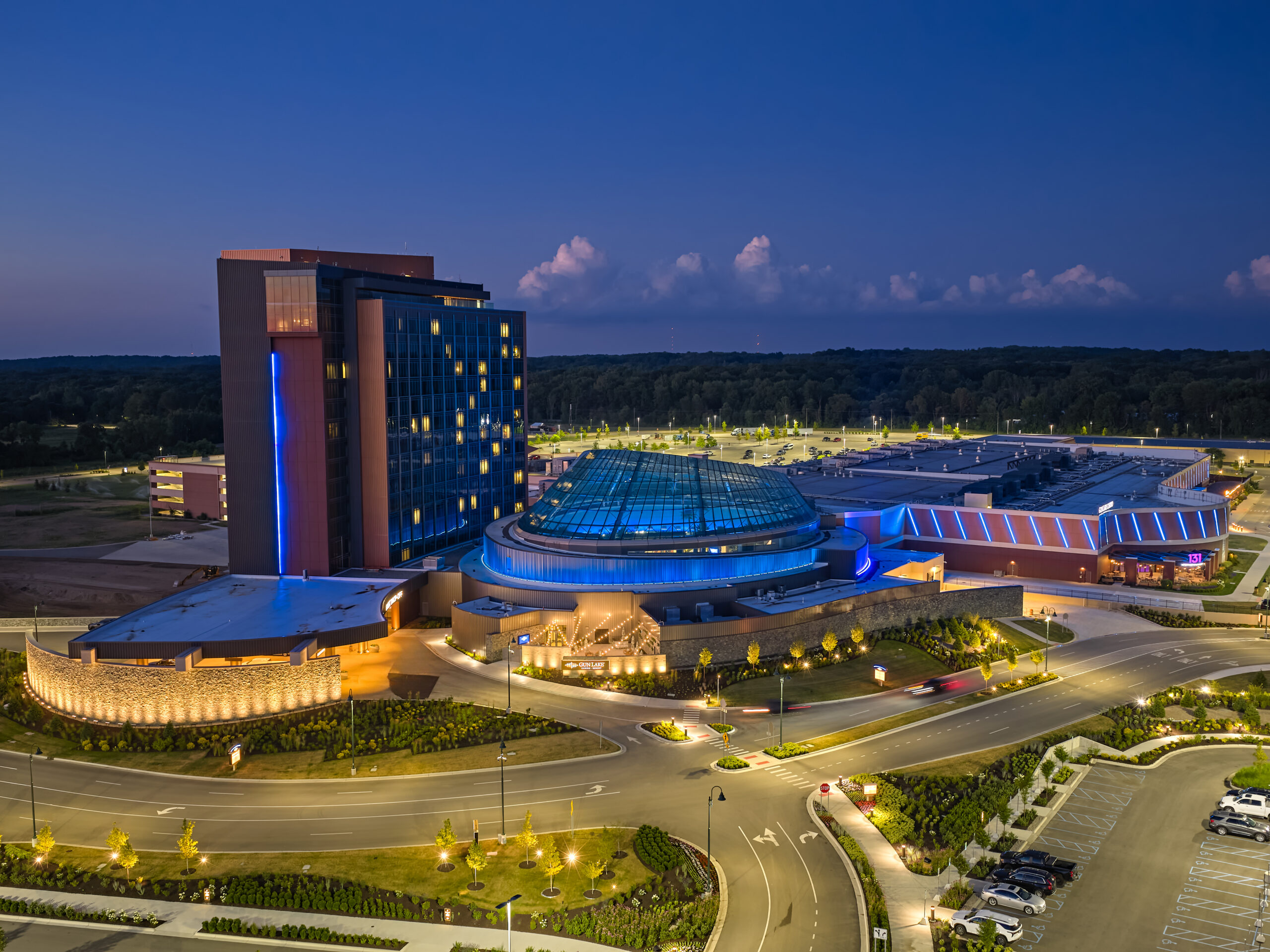
The expansion of Gun Lake Casino Resort, Wayland, Michigan, integrates a new hotel and year-round resort amenities with the existing casino, strengthening operational connectivity, guest appeal, and market competitiveness.
As casino resorts become increasingly complex businesses, the definition of efficiency is evolving. TG&H sat down with HBG Design President Nathan Peak, AIA, to discuss how savvy operators are using design as a strategic tool to create long-term value.
TG&H: For years, efficiency in casino design has focused on cost and speed to market. What’s changing?
NP: Those priorities still matter, but we’re seeing more focus on long-term business strategies. Operators are recognizing that designing efficiency is about creating a high-performing operation that delivers value across the entire business, influencing employee productivity and guest satisfaction, as well as maintenance costs and future growth.
Strategic thinking begins early. I’d challenge any operator to ask themselves: if you’re not bringing operations, employee experience, guest expectations, lifecycle costs, and long-term adaptability into the conversation from day one, then what could you miss in creating not just a project investment but a competitive advantage?
TG&H: If an owner or operator wants to design a more efficient casino resort, what are the top priorities they should focus on?
-
Design for the Entire Lifecycle, Not Just the Grand Opening
Project decisions shouldn’t be driven by opening-day budgets and schedules. While important, the real measure of success is how a property performs over the next 10, 20, or even 30 years. Durable furnishings and finishes, resilient infrastructure, and adaptable planning can significantly reduce maintenance needs, replacement costs, and operational disruptions. The goal is not simply to spend less today; it’s to maximize value over the life of the asset. -
Plan for Change Before It Happens
Everything evolves. Investing in flexible building systems and infrastructure helps a property adapt to new technologies, changing customer expectations, and future expansions without requiring costly renovations. Designing infrastructure capacity, strategic adjacencies, and expansion options from the start enables operators to meet future needs while minimizing business disruptions.
-
Make the Employee Experience a Design Priority
One of the most effective ways to improve operations is by enhancing the work environment. Efficient back-of-house layouts, convenient access points, thoughtfully planned support spaces, and streamlined circulation can help teams work faster, communicate better, and deliver more consistent service. Employee-focused design is based on a simple yet often overlooked reality: the guest experience is heavily influenced by the employees delivering it.
-
Align Operations and Guest Experience from the Start
The best-performing resorts don’t treat operational efficiency and guest experience as competing priorities; they’re designed simultaneously. Service functions, loading areas, and support operations should work seamlessly behind the scenes. When operations are carefully integrated into the design process, properties can deliver exceptional guest experiences while maintaining speed, consistency, and efficiency.
TG&H: What does this mean for the future of casino resort development?
NP: The most successful developments will be those that intentionally connect operations, guest experience, and asset value from the very beginning. Properties leading the next generation of gaming will be designed to work smarter every day after opening. That’s where design becomes more than a project investment—it becomes a competitive advantage.
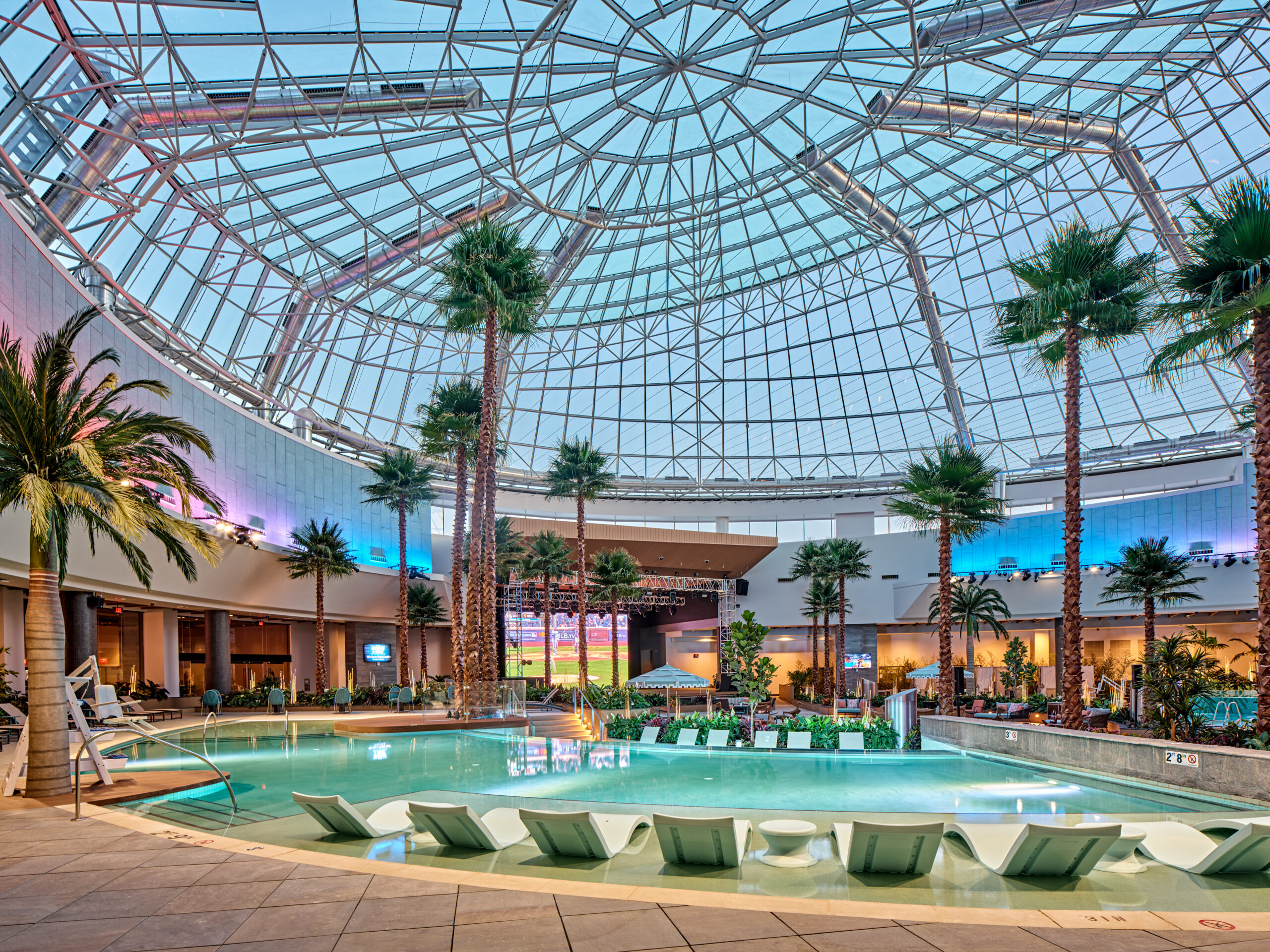 Gun Lake’s Wawye Oasis is a visual expression of designing for flexibility and long-term performance. It is a year-round resort environment that supports recreation, entertainment, dining, events, and evolving guest expectations within one adaptable destination.
Continue the Conversation
Every casino resort faces a different set of operational priorities, guest expectations, and long-term investment decisions. If these ideas connect with plans underway for your property, Nathan Peak and the HBG Design team would welcome the opportunity to exchange perspectives and learn more about the challenges and opportunities you are considering.
DOWNLOAD HBG DESIGN’S 2026 HOSPITALITY REPORT
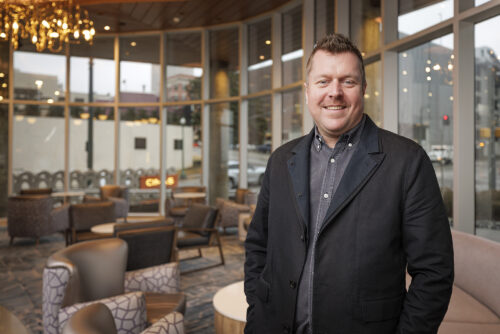
CONTACT NATHAN AT:
Nathan Peak, AIA
President
HBG Design
npeak@hbg.design
www.hbg.design